Why Your Latte Art Rosetta Doesn't Look Right — And How to Fix It
The Rosetta is the shape that separates beginners from intermediate baristas. Those elegant, fern-like leaves look impossibly precise — and when yours comes out looking like a messy zigzag, it's hard to know where it went wrong.
The Rosetta is the most technically demanding of the beginner shapes because it combines three separate motions simultaneously: a side-to-side wiggle, a backward movement across the cup, and a final pull-through. Each one can go wrong independently. Here's what to look for.
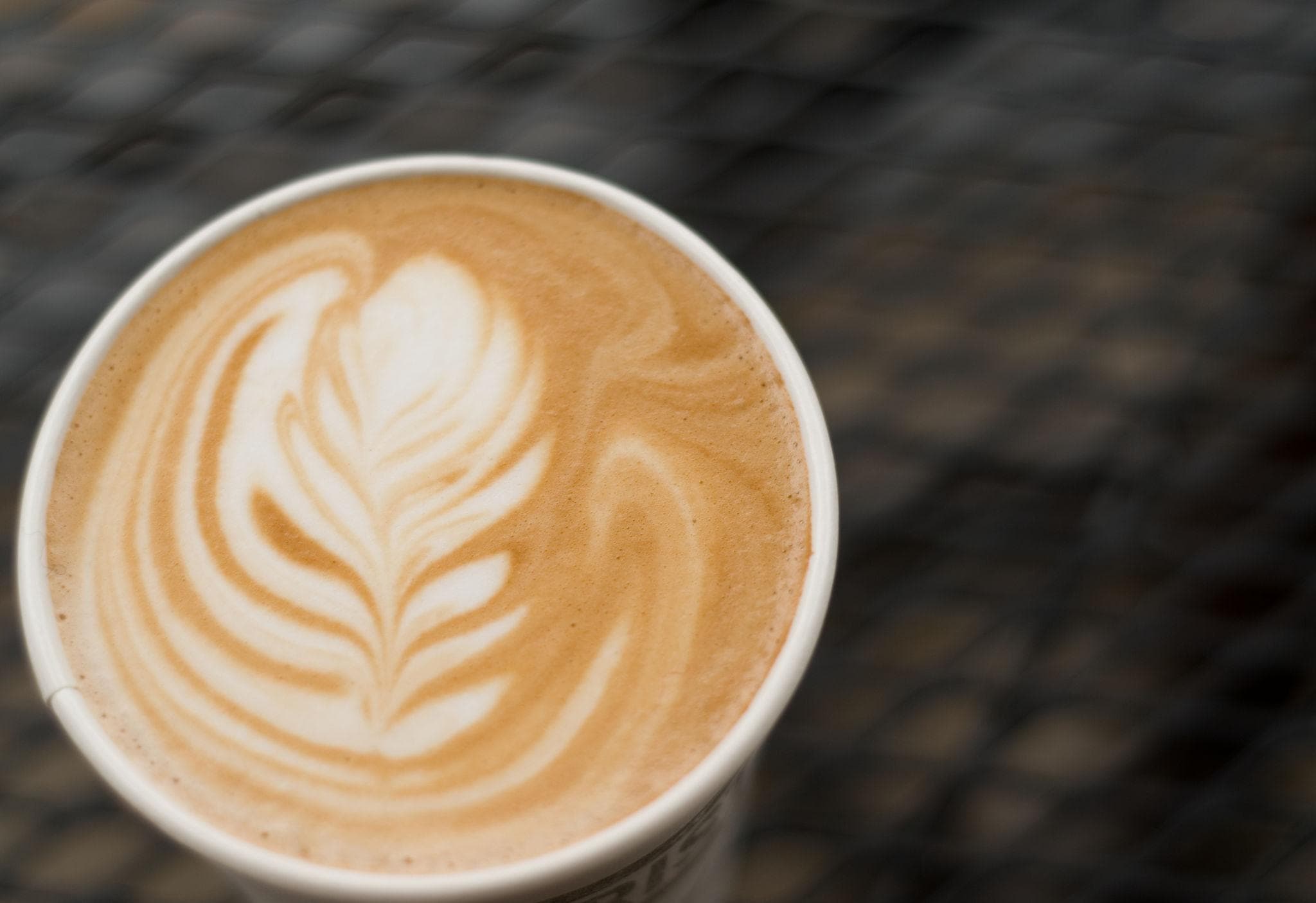
Your Wiggle Is Too Big or Too Small
The wiggle is the heart of the Rosetta — it creates those distinctive leaf-like ridges on either side. But the size of your wiggle determines everything. Too big and the leaves sprawl messily across the cup with no definition. Too small and the Rosetta looks thin and undernourished, more like a line than a leaf pattern.
Most beginners start with an overly cautious wiggle that produces a narrow, spindly shape — then overcorrect and end up with a wide, chaotic one.
The fix: Your wiggle should be small and consistent — think of it as a rapid, controlled wrist flick rather than a full arm movement. Aim for roughly 1–1.5cm side to side, keeping the rhythm even throughout. Practice the motion without milk first to build muscle memory.
Brew · Brew's definition score reflects this directly — overly wide or inconsistent wiggles show up as soft, undefined leaf edges on your score breakdown.
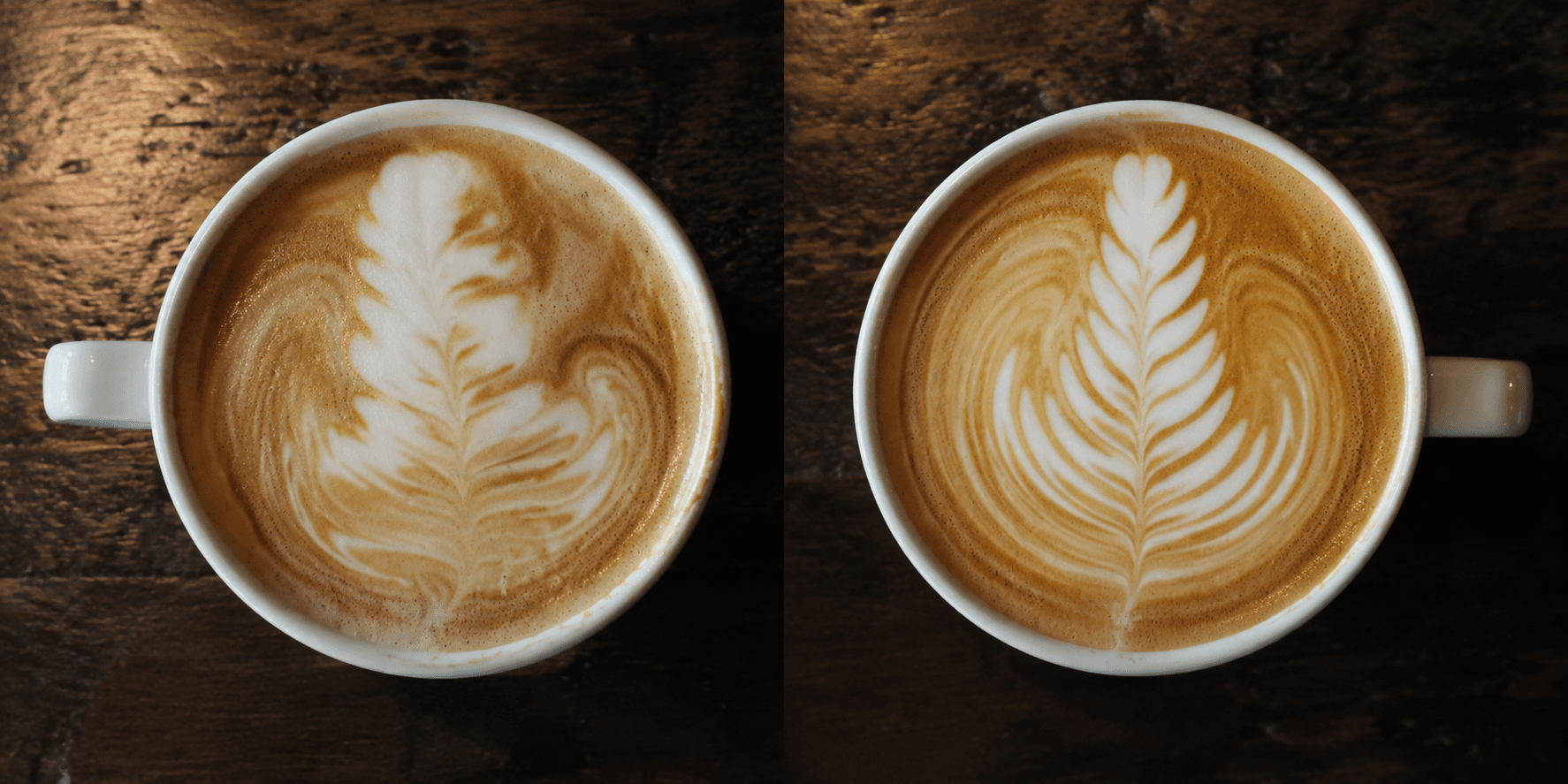
You're Starting in the Wrong Location
This is the most overlooked Rosetta mistake. Where you begin your wiggle determines how much space you have to build the shape — and most beginners start too close to the near edge of the cup, leaving no room to move backward.
The result? A Rosetta that runs out of space halfway through, with compressed leaves bunched together at the bottom and no room for a clean finish.
The fix: Start your wiggle at roughly the halfway point of the cup — further back than feels natural. You'll move toward yourself as you wiggle, so you need that space behind you. Think of the cup as a canvas you're filling from the middle outward.
Brew · Brew's symmetry score picks up starting position errors — a Rosetta that's cramped on one end or lopsided is almost always a starting position problem.
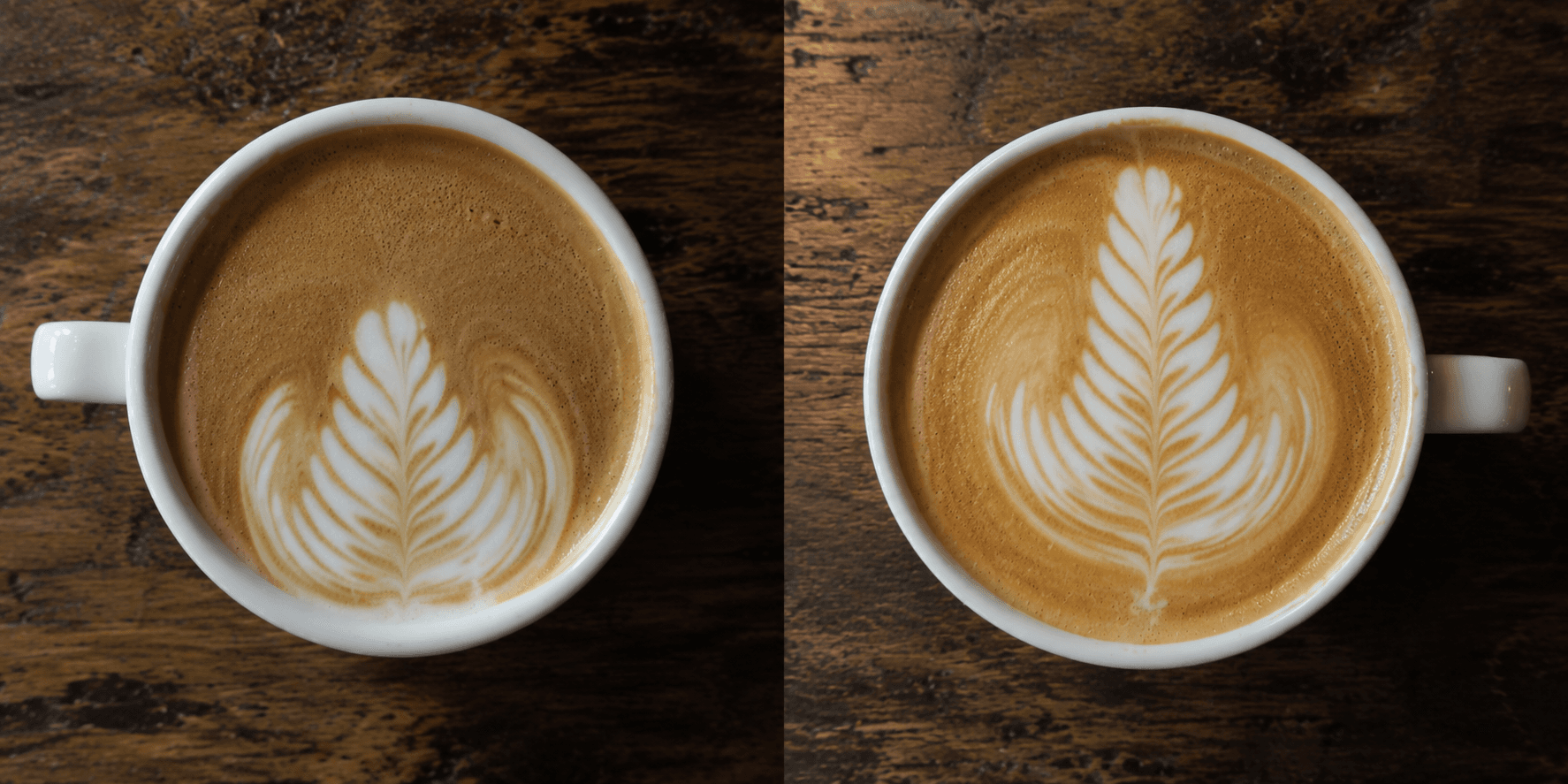
Your Pull-Through Isn't Centered
The final pull-through is what transforms a wiggle pattern into a recognizable Rosetta — that single line drawn through the center that splits the leaves and creates the stem. When it's off-center, one side of the Rosetta collapses and the shape loses its symmetry entirely.
Most beginners either rush the pull-through or drift to one side without realizing it.
The fix: Pause for a half second before the pull-through to reset. Find the visual center of your wiggle pattern, then draw a slow, steady line straight through the middle toward the far edge of the cup. Slow is better than fast here — speed causes drift.
Brew · Brew's symmetry score shows you exactly how centered your pull-through was and which side collapsed as a result.
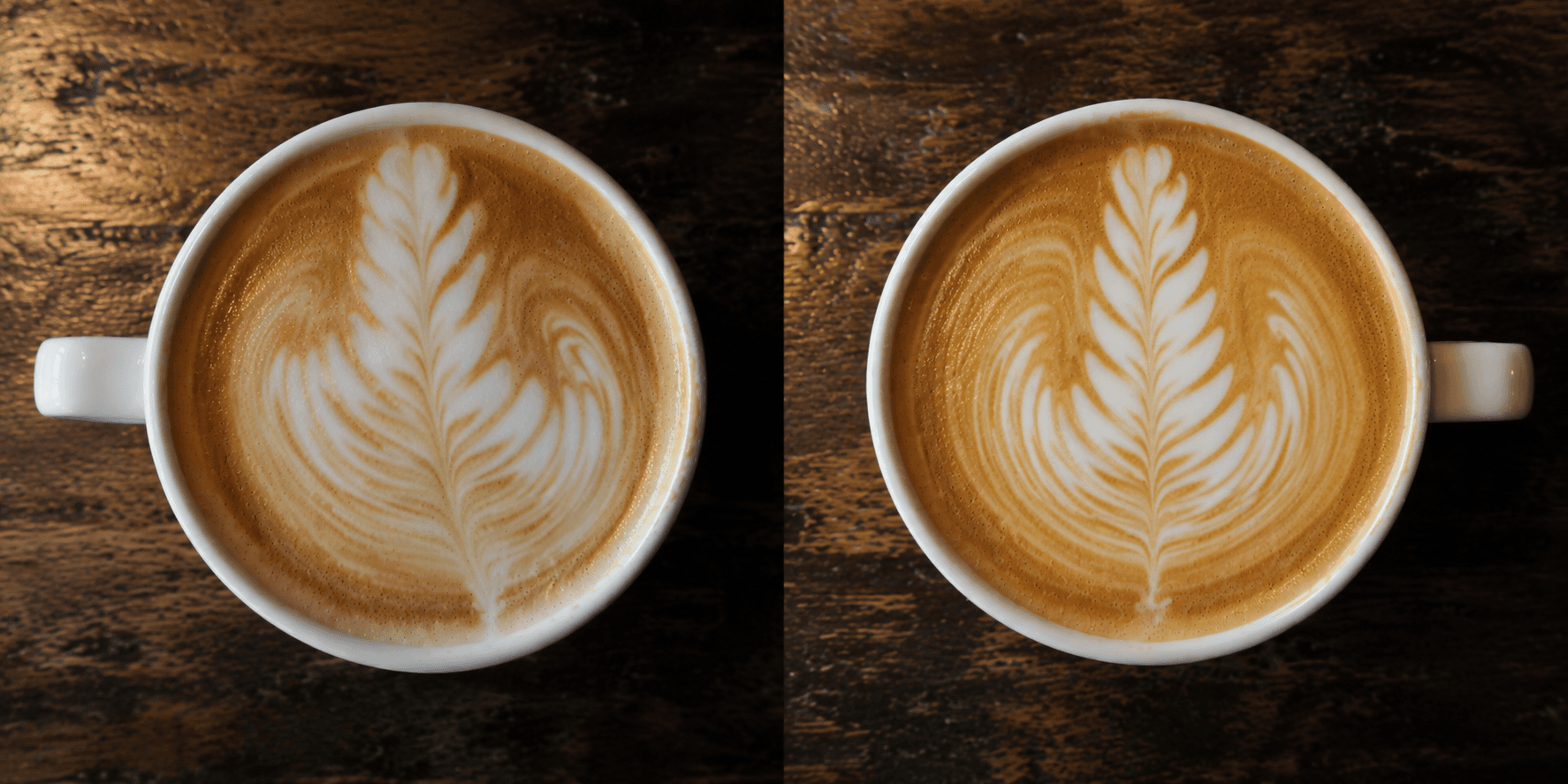
Three Motions, One Pour — Know Exactly What Went Wrong
The Rosetta is hard to self-diagnose because by the time it looks wrong, you've already made a dozen micro-decisions. Was it the wiggle size? The starting position? The pull-through? Usually it's a combination — and without feedback, you end up repeating the same mistakes pour after pour. Brew breaks it down for you.
Try Brew free — a pour every day, no card →