The bag decides more than the machine.
Roast level changes a drink more than anything you do to it afterwards. Pick what you actually buy and see how it fits every brewing context — and where it warns you off.
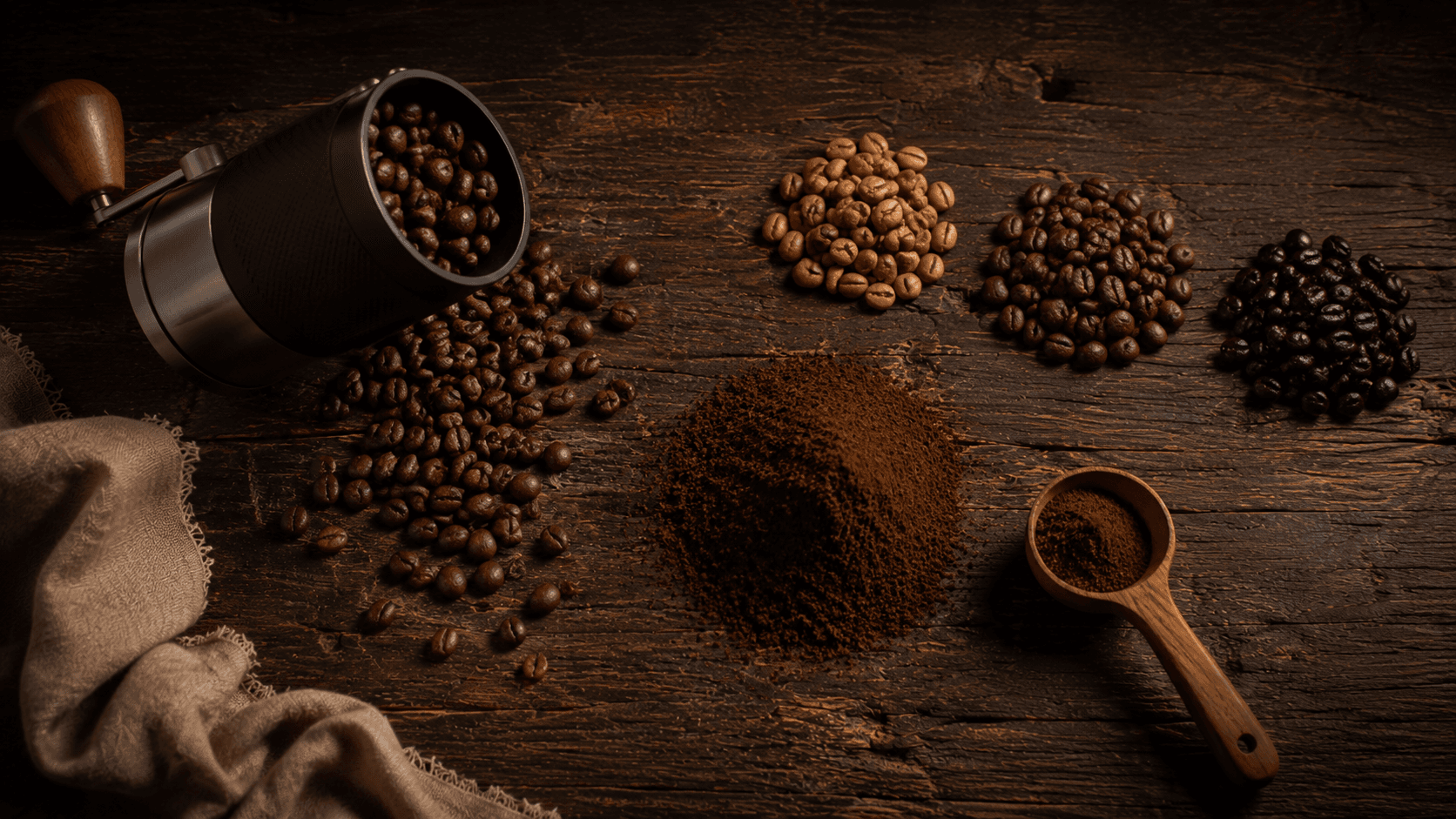
Roast, by what you ask it to do
Saved to your kit — see it applied on every coffee recipe.
Espresso
Good fitThe safe default and the easiest to dial in. Enough sweetness and body to forgive a grind that is slightly off, without the ashiness a dark roast can bring. Start here if you are still learning the machine.
Through milk
Good fitWorks, and it is what most specialty cafés pour. Read the bag: notes mentioning chocolate, caramel or nuts will survive milk, and notes mentioning jasmine or bergamot will not.
Filter
Good fitComfortable and forgiving. Less dramatic than a light roast, considerably more interesting than a dark one. A good place to be when you want to drink the coffee rather than study it.
Cold brew
Good fitFine, and the least wasteful choice if you only buy one bag for everything. Slightly less chocolatey than a dark roast, with no bitterness to strip out.
Flash brew and espresso tonic
WorkableWorkable but muted. You get a clean, pleasant cup without the fireworks that make flash brew worth the extra trouble.
Turkish and Vietnamese
WorkableAcceptable in an ibrik if you like it less heavy. Vietnamese really wants the dark robusta blend — a medium arabica through a phin tastes weak against condensed milk.
Looking for decaf specifically?
Decaf is not a fourth roast — it is a separate axis. Decaf beans are roasted light, medium or dark like any others, so both settings apply at once. What decaffeination changes is how the bean behaves, not how it tastes.
Read the decaf guide →Reading a bag
There is no useful list of good coffee brands. Roasting is thousands of small businesses, beans are seasonal, and a blend changes composition through the year while keeping its name. What travels is knowing what to look at.
Roast date, not best-before
The single most useful thing on any bag. A best-before date twelve months out tells you the roaster is not proud of the roast date. Espresso is usually at its best 5–21 days after roasting; filter from about 3 days. Under three days it is still degassing and the brew will be unstable.
Tasting notes tell you the roast level
Most bags never state light, medium or dark, but the notes give it away. Citrus, floral, berry or tea means light. Chocolate, caramel, nut or toffee means medium to medium-dark. Toast, dark chocolate, smoke or simply espresso blend means dark.
Blend for espresso and milk, single origin for filter
Blends are built for consistency and body, which is what survives 9 bar and 200 ml of milk. Single origins are built to taste of a specific place, which is what a filter brew is for. Neither rule is absolute, but going against it is the harder path.
Process is a bigger lever than origin
Washed is clean and acidic, natural is fruity and heavier, honey sits between them. For most home drinkers this changes the cup more than the country does, and it is usually printed.
Whole bean, always
Pre-ground coffee was ground for one method and started going stale on the day. If you have a grinder, buying pre-ground throws away most of what you paid for.
On decaf bags specifically
Look for the process named — Swiss Water, CO2, sugarcane or ethyl acetate. A bag that will not say is usually solvent-processed at commodity scale. Roast date matters more here than it does for regular coffee, because decaf stales faster.
Ignore altitude and varietal
Both are real, and both are noise at home. Neither will tell you anything actionable until roast date, process and grind are already under control.
Grind scale
Grinder numbers mean nothing between machines — a 12 on one is a 4 on another. Kitchen textures travel. Match what comes out of yours to the description, then adjust from there.
Powder — like icing sugar
Turkish coffee
Fine — like table salt, finer
Espresso, Ristretto, Lungo, Caffè macchiato, and 22 more
Medium-fine — like fine sand
Caffè con la moka, Japanese iced coffee, AeroPress
Medium — like coarse sand
Pour-over (V60)
Medium-coarse — like raw sugar
Cà phê sữa đá
Coarse — like sea salt
French press
Extra coarse — like cracked peppercorn
Cold brew concentrate
Caffeine
What actually moves the number
- Species. Robusta carries roughly twice the caffeine of arabica. This alone can double any figure in the app, and it is why Vietnamese phin coffee sits so high.
- Dose, not strength of taste. A 500 ml French press holds more caffeine than a double espresso, because it started with more coffee. Espresso is concentrated, not large.
- Contact time. Filter and cold brew extract more caffeine per gram than espresso does.
- Roast level barely matters. Dark roast is not meaningfully lower in caffeine per gram — the widely repeated claim comes from measuring by scoop rather than by weight.
Dial it in
Sour, thin, sharp
Under-extracted. Grind finer, or raise the water temperature, or extend the brew. On espresso, finer first.
Bitter, drying, hollow
Over-extracted. Grind coarser, or drop the temperature, or shorten the brew.
Both at once
Uneven extraction rather than the wrong setting. Usually a distribution problem on espresso or an uneven pour on filter — fix the technique before touching the grinder.
It changed and you did not
Beans age and grinders drift. A coffee two weeks further from roast usually wants a step finer.
The rule
One variable per brew. Change the grind or the ratio or the temperature — never two, or you learn nothing from the result.