Latte Art for Beginners: Your First Pour, Step by Step
Every barista whose pours you admire on Instagram once stood exactly where you are: pitcher in hand, no idea where to start, and a first attempt that looked like spilled milk. That's not a talent gap — it's just the starting line.
This guide is the complete first-pour walkthrough: the minimal gear you need, the one skill that matters more than everything else, and what a realistic first goal actually looks like.

You Need Less Gear Than You Think
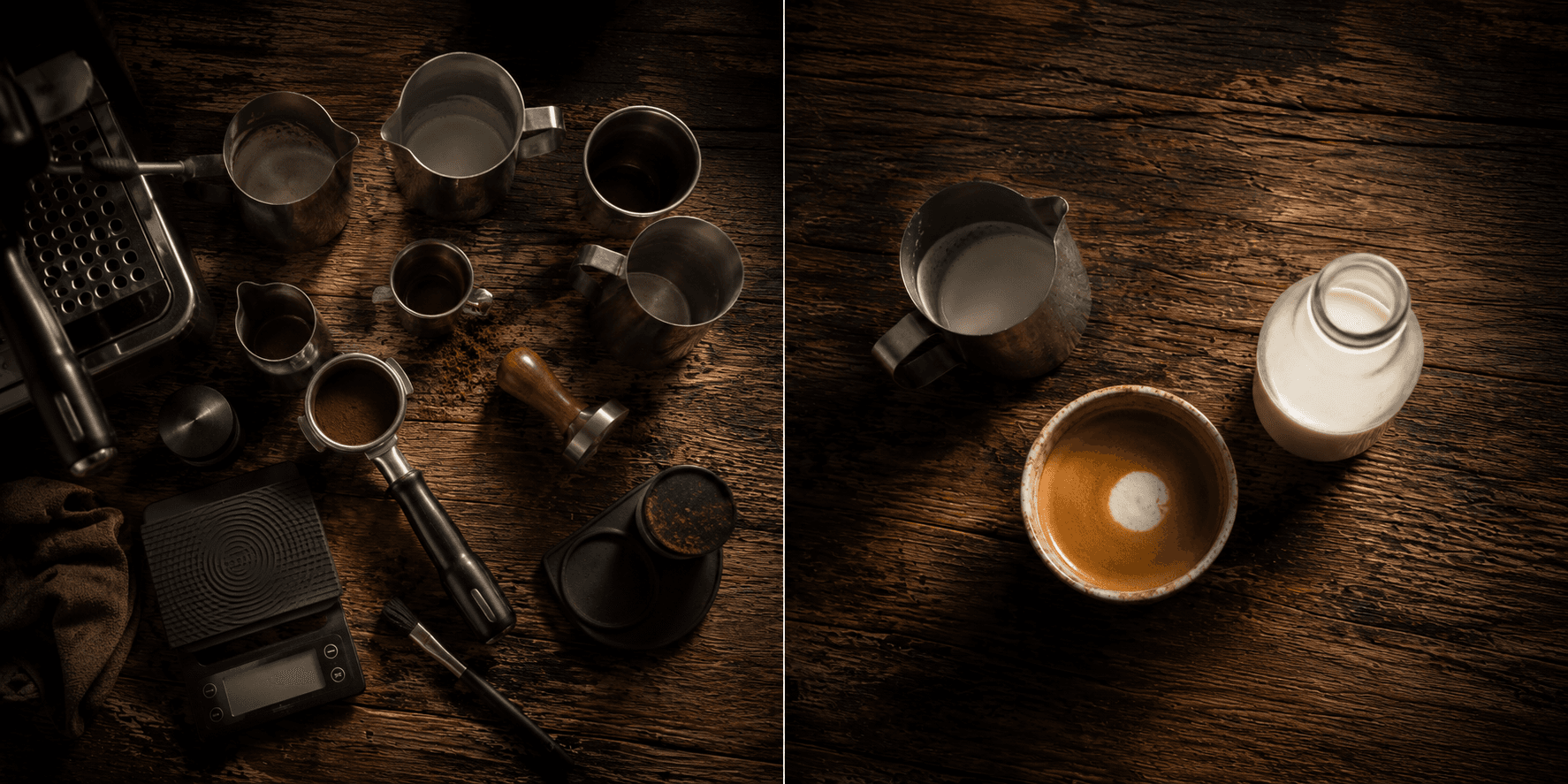
The single most common beginner mistake happens before any milk is poured: assuming you need a professional machine. You don't. You need three things — an espresso (or strong coffee base with crema), milk you can steam or froth to a silky texture, and a pitcher with a spout.
Any home espresso machine with a steam wand works. Even entry-level machines can produce latte-art-quality microfoam once you know the technique. A 350–400ml stainless steel pitcher with a sharp spout is the one purchase that genuinely helps — it gives you the pour control a jug or measuring cup can't.
The fix: Start with what you have. A basic machine, whole milk, and a proper pitcher (€10–15) is a complete latte art setup. Upgrade the machine only after your milk texture is consistently good — not before.
Brew · Brew is calibrated on phone photos of pours from home setups, not café gear. If the pour has a shape, it can score it — no fancy equipment required.
Milk Texture Is 80% of the Game
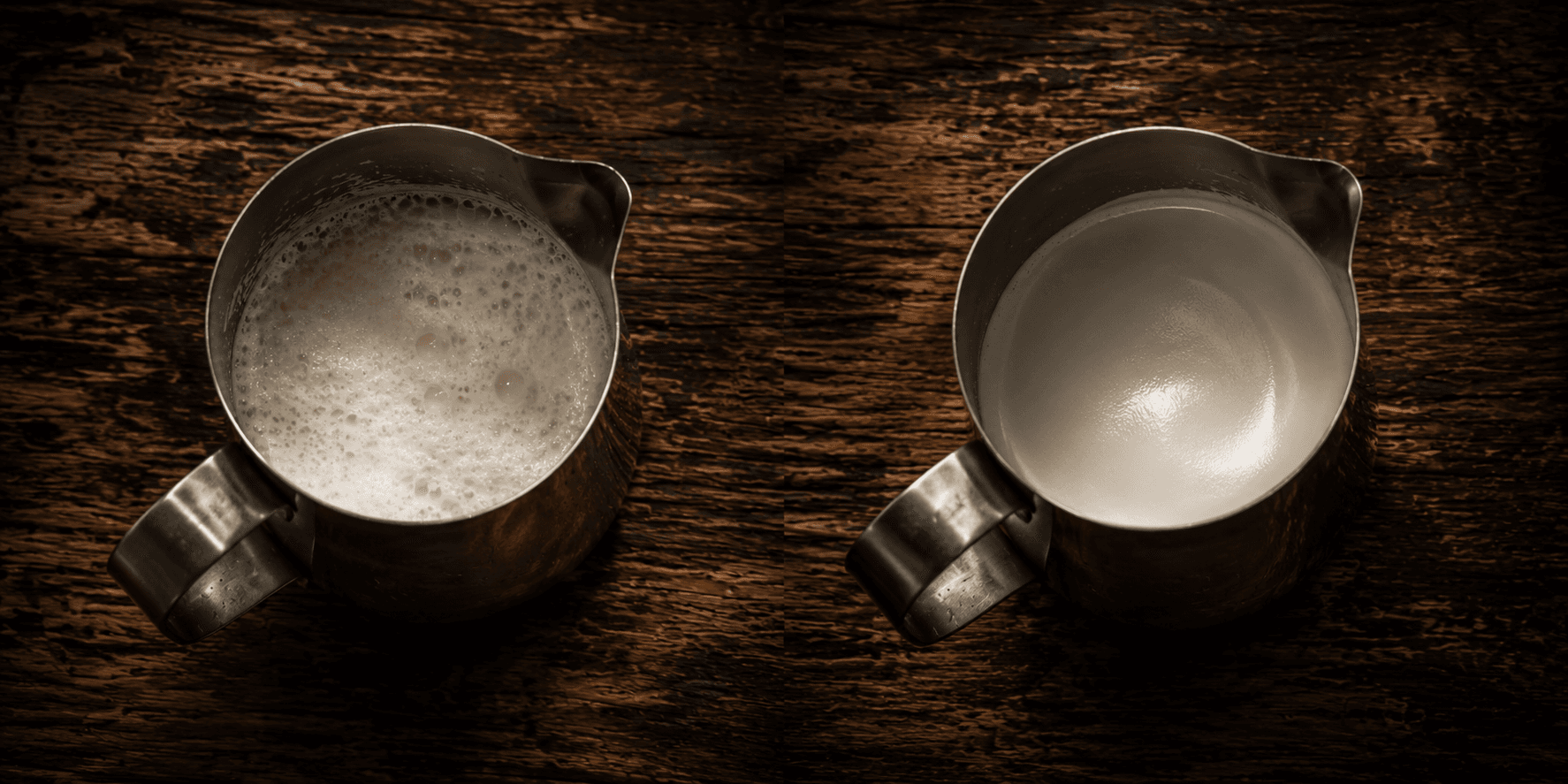
If you learn one thing from this guide, make it this: latte art is mostly made at the steam wand, not during the pour. Silky, glossy microfoam — the texture of wet paint — is what lets a shape sit on the surface with clean, high-contrast edges.
Steam your milk to 60–65°C. Keep the wand tip just below the surface for the first few seconds to stretch the milk (you'll hear a gentle paper-tearing sound), then submerge it slightly to spin a whirlpool that folds the bubbles into microfoam. Tap the pitcher on the counter, swirl until glossy, and pour immediately.
The fix: Before your first shape attempt, spend two or three sessions only on milk. When your steamed milk consistently looks like wet paint after a swirl — no visible bubbles — you're ready to pour.
Brew · Brew flags milk texture on every pour (too thin, too thick, or good), so you know whether to work on your steaming or your pouring — they're different fixes.
Your First Shape: The Dot, Then the Heart
Don't start with a rosetta. The realistic first milestone is simpler: pour a clean white dot in the centre of the cup. Start pouring from about 8–10cm high with a thin stream to fill the cup halfway, then bring the spout right down to the surface and increase the flow. If a white dot blooms — congratulations, you've floated milk. That's the fundamental skill.
Once the dot is reliable, turn it into a heart: widen the dot with a gentle side-to-side wiggle, then finish by lifting the pitcher and drawing a thin stream straight through the middle.
The fix: Session one goal: a visible white dot, centred. Session two goal: a bigger dot with a wiggle. Session three goal: the pull-through. Break it down this way and the heart arrives in a week or two instead of a frustrating month.
Brew · Upload your first attempts to Brew even if they look rough — the feedback names the exact reason the dot didn't appear (usually pour height), which is much faster than guessing.

Your First Pour Deserves Feedback Too
The difference between people who learn latte art in weeks and people who plateau for months is a feedback loop. Brew looks at a photo of any pour — even a first attempt — and tells you the one thing to change next time. One free pour every day, straight from your phone.
Try Brew free — a pour every day, no card →