The Best Milk for Latte Art: Whole, Skim, Oat and Barista Blends Compared
Two numbers on the carton decide most of your latte art potential before you touch the steam wand: protein builds and stabilises the foam, fat makes it glossy, pourable, and slow to separate.
Here's how the common options actually compare in the cup — and why the 'best' milk depends on what you're optimising for.

Whole Dairy Milk: Still the Benchmark
Whole milk (3–4% fat, ~3.4% protein) is what latte art technique was developed on. The protein holds a stable microfoam; the fat gives it that glossy, paint-like flow and buys you time before the milk separates in the pitcher.
Skim milk is a common trap: with no fat to limit it, it foams too readily into a stiff, dry, matte foam that's hard to pour precisely. Shapes come out puffy with weak contrast.
The fix: If you're learning, learn on whole milk. It's the most forgiving canvas and makes it easy to tell whether a failed pour was your technique or your ingredients. Move to alternatives after your heart is consistent.
Brew · Brew's scoring was calibrated across milk types, but pours on whole milk typically show the clearest contrast — useful when you're trying to isolate technique problems.

Oat Milk: The Best Plant Option — With Caveats
Among plant milks, oat is the clear latte art winner: its texture and pour behaviour are closest to dairy, and barista editions are formulated with added fat specifically for steaming.
The caveats: less protein means the foam is more fragile and separates faster, so you steam slightly cooler and pour sooner. Soy foams well but splits easily in hot, acidic coffee; almond is the hardest of the common options — thin body, coarse foam.
The fix: Choose a barista-edition oat milk and treat it as a slightly faster game: shorter stretch, 55–60°C, swirl, and pour within five seconds.
Brew · If your plant milk pours score consistently lower on contrast, compare a barista blend against the regular version of the same brand — the score difference is usually immediate.

What Actually Matters on the Label
Whatever the milk type, the same two rules of thumb apply. Protein around 3% or higher: enough structure for stable microfoam. Fat around 3% or higher: gloss, flow, and forgiveness.
Freshness and temperature matter more than brand: as milk ages, enzymes break its fat down into free fatty acids that collapse foam long before the milk tastes off — and milk should start fridge-cold, which gives you a longer stretching window before it hits temperature.
The fix: Check the nutrition label, not the marketing. ~3% protein + ~3% fat, fridge-cold and fresh, is a latte-art-capable milk — dairy or plant.
Brew · Changed milk and want to know if it helped? Pour the same shape with the old and new milk and compare the two Brew scores — same shape, same technique, the milk is the only variable.
Test Your Milk, Don't Debate It
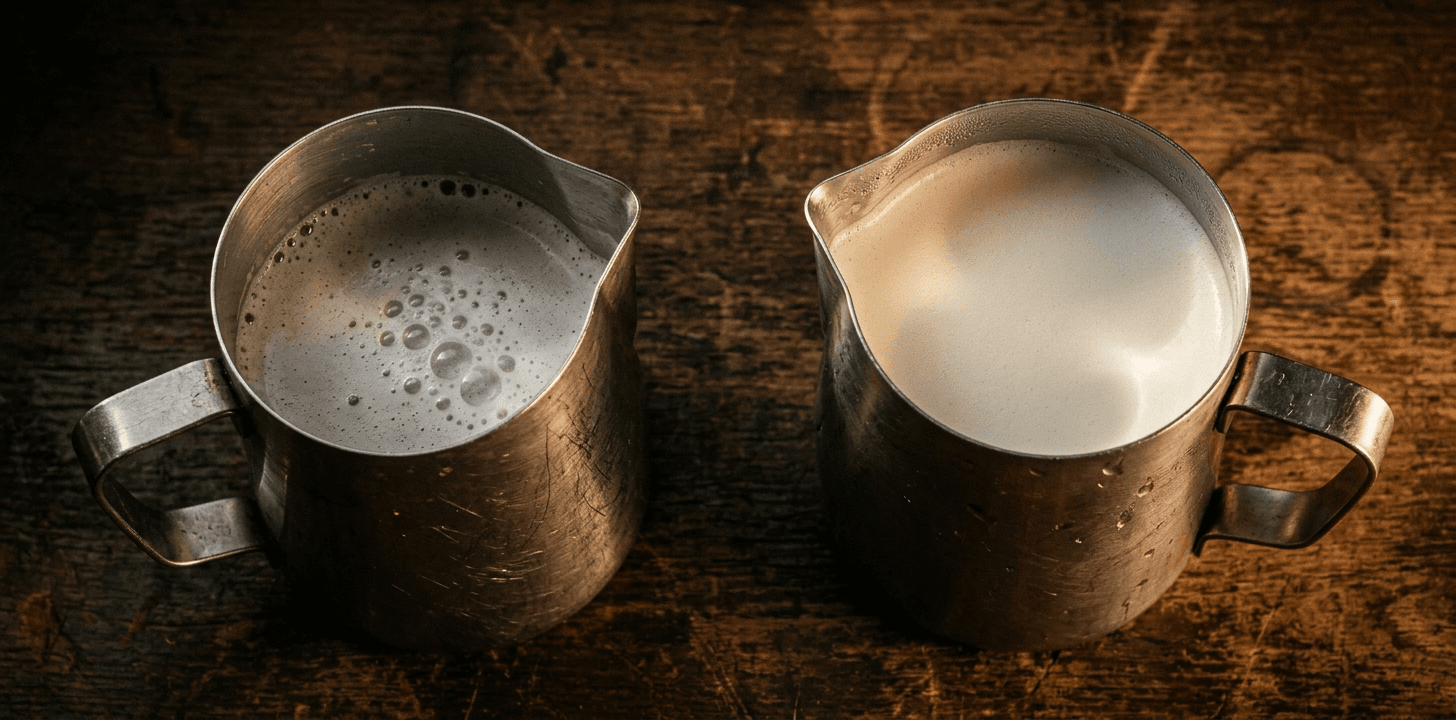
The fastest way to settle a milk question is two pours and two scores. Brew gives you an objective symmetry, contrast, and definition breakdown for each — so you can see exactly what the milk changed.
Try Brew free — a pour every day, no card →