Oat Milk Latte Art: Why It Behaves Differently and How to Pour It
You've got a decent heart with dairy, but the moment you switch to oat milk the shape goes soft, the foam turns bubbly, or the pattern sinks entirely. You're not imagining it — oat milk really does behave differently.
The good news: barista-style oat milk is the most latte-art-friendly plant milk there is, and the adjustments are small once you know what's changing under the surface.

Oat Milk Has Less Protein — So the Foam Is More Fragile
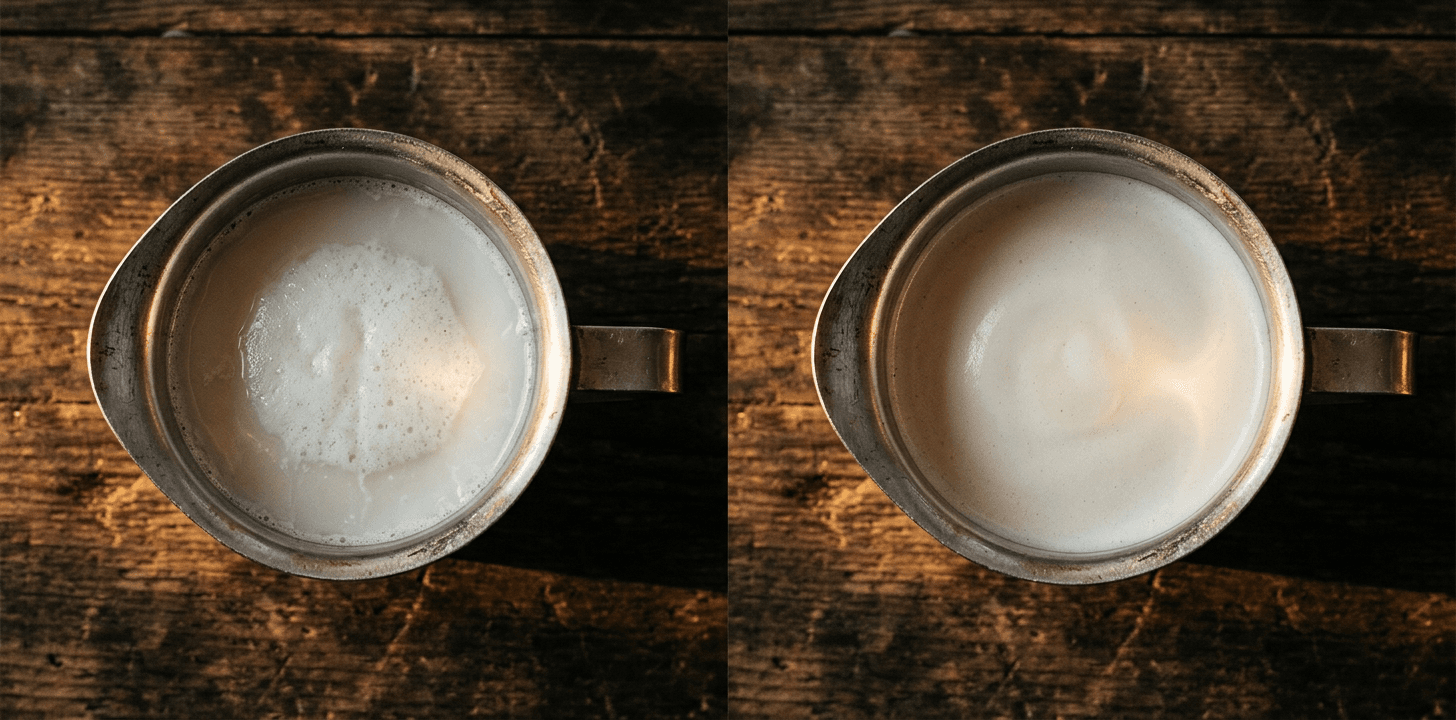
Dairy microfoam is stabilised by milk proteins. Oat milk has roughly a third of the protein, so its foam collapses faster and larger bubbles form more easily during steaming.
This is why oat foam that looked fine in the pitcher can be separating by the time you pour — the window between 'perfectly textured' and 'gone flat' is much shorter than with dairy.
The fix: Steam slightly cooler (55–60°C instead of 60–65°C), stretch for less time, and pour immediately after swirling — within five seconds, not fifteen. Oat foam waits for no one.
Brew · Brew's contrast score picks up collapsing foam instantly — if your oat pours score noticeably lower on contrast than your dairy pours, the fix is timing, not technique.
You're Not Using a Barista Blend
Regular oat milk from the supermarket shelf is formulated for drinking, not steaming. Barista editions add fat and acidity regulators specifically so the milk stretches, holds microfoam, and doesn't split in hot coffee.
If your oat milk foam looks thin, watery, or splits into curds on contact with espresso, the carton is the problem — no steaming technique fixes a formulation issue.
The fix: Use a barista-edition oat milk. The difference isn't marketing — the added fat is what makes microfoam and clean pours physically possible.
Brew · A pour that scores low on both contrast and definition despite good technique is the classic signature of non-barista plant milk.

Oat Milk Pours Heavier — Adjust Your Height and Speed
Oat milk is denser than dairy, so it punches through the crema more easily. The pour height that floats a shape with dairy can sink it entirely with oat.
The symptom: your technique feels identical, but the shape is pale and ghost-like, visible under the surface instead of sitting on top of it.
The fix: Bring the pitcher even closer to the surface for the design phase — practically touching — and pour slightly faster once the shape starts forming, so the foam lands before it degrades.
Brew · Brew doesn't penalise you for pouring plant milk — it scores what's in the cup and names the mechanical fix, whether that's height, speed, or texture.

Same Feedback, Any Milk
Dairy, oat, soy, or matcha underneath — Brew scores the pour that's actually in your cup and tells you the one adjustment that will improve the next one. A free pour every day, no card needed.
Try Brew free — a pour every day, no card →