Latte Art on a Budget Espresso Machine: What Actually Matters
Browse any coffee forum and you'll come away convinced latte art starts at a €1,500 machine. It doesn't. Café-quality shapes are poured every day on entry-level home machines — the technique just needs a few adjustments.
Here's what a budget machine actually limits, what it doesn't, and the order in which upgrades genuinely matter.
Weak Steam Is a Timing Problem, Not a Dealbreaker
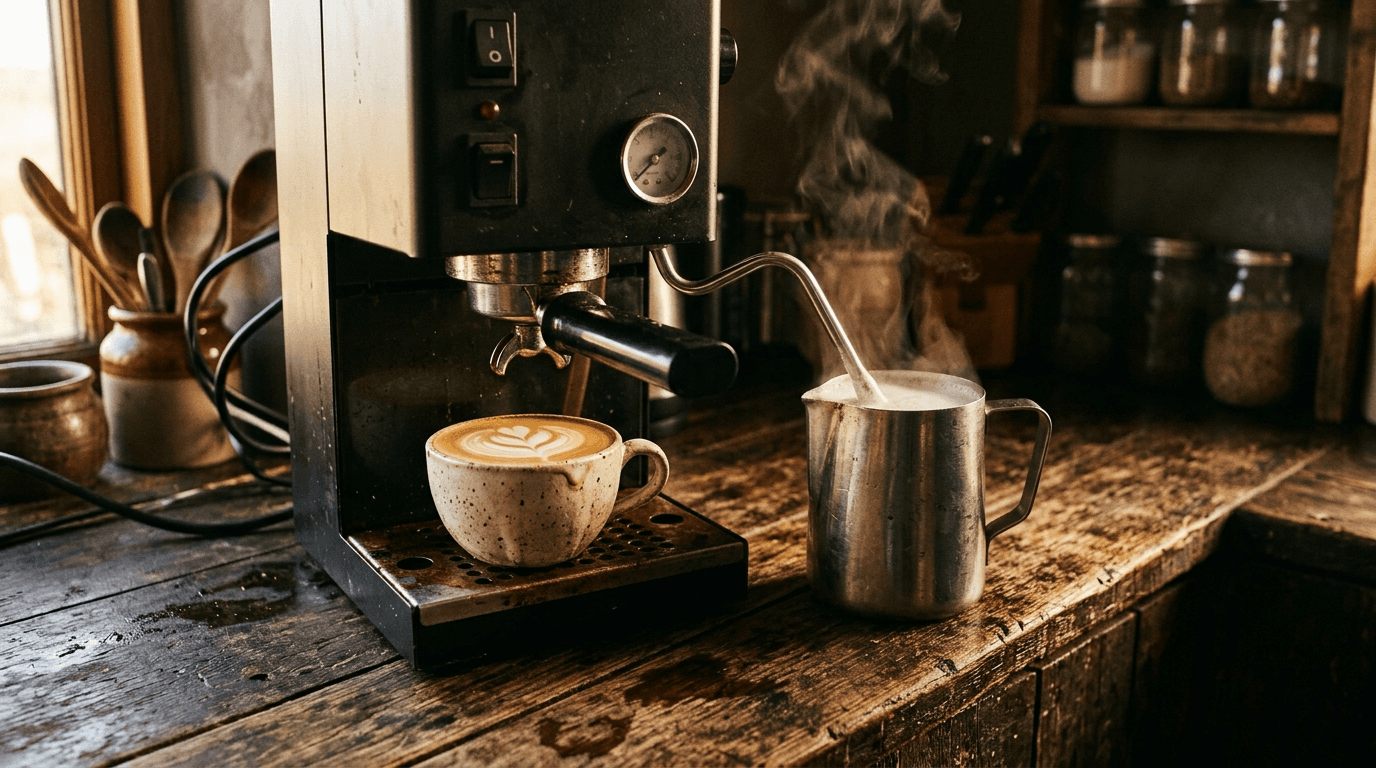
The real difference between a €200 machine and a €2,000 one isn't foam quality — it's steam power. A commercial wand textures a pitcher in 10–15 seconds; a budget single-boiler takes 30–45. Same physics, slower.
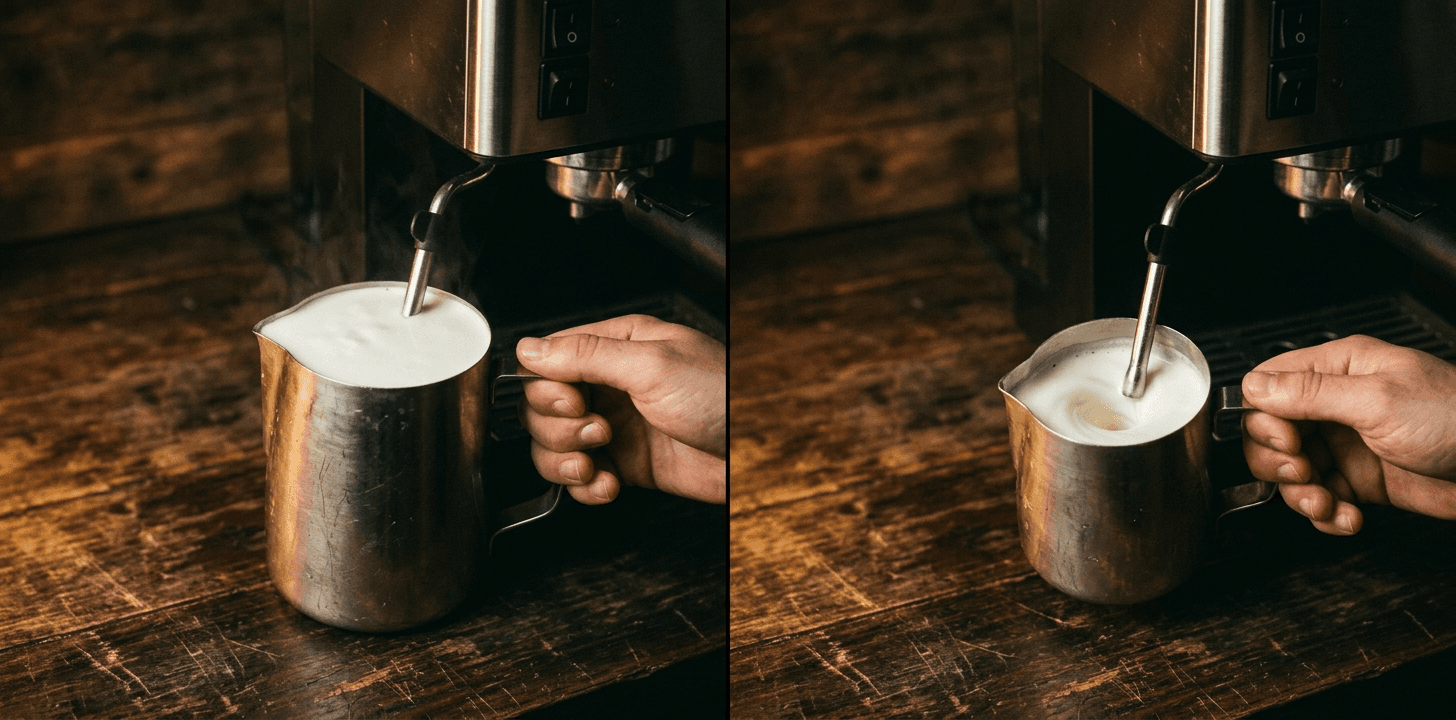
Slower steam is actually more forgiving for beginners: the stretch phase is easier to control when the milk isn't screaming to temperature. The catch is that weak steam struggles to spin a strong whirlpool in a large pitcher.
The fix: Use less milk — a smaller pitcher (350ml) half full lets a weak wand build a proper whirlpool. Angle the pitcher so the wand drives the milk in a circle, and accept the longer steaming time rather than over-stretching to compensate.
Brew · Brew can't see your machine — only your milk texture and pour. Plenty of high-scoring pours in the calibration set came from entry-level machines with patient steaming.
The Crema Canvas Matters More Than the Machine's Price
Latte art needs a stable brown surface to draw on. Budget machines with pressurised baskets produce a foamy, bubbly fake crema that breaks up as soon as milk touches it — this hurts your art more than the steam wand does.
If your shapes look shredded or patchy even when the milk is silky, the canvas is the problem, not the pour.
The fix: Swap the pressurised basket for a standard (non-pressurised) one and grind fresh — it's a €10–20 change that transforms the crema. Let the shot settle for a few seconds and swirl the cup gently before pouring.
Brew · Patchy, broken patterns with decent symmetry are the classic weak-crema signature — if Brew's feedback keeps pointing at definition while your milk texture reads 'good', look at your espresso, not your pour.

Where Your Money Actually Helps (In Order)
If you do want to spend, the return-per-euro ranking is surprisingly consistent: a good pitcher first (€15 — sharp spout, right size), fresh beans and a decent grinder second (the crema canvas), and the machine itself a distant third.
A €1,000 machine upgrade with stale pre-ground coffee will pour worse art than a €150 machine with a proper basket, fresh beans, and a sharp-spouted pitcher.
The fix: Upgrade order: pitcher → non-pressurised basket → grinder/fresh beans → machine. Master the fundamentals at each step before the next — the skills transfer completely when you eventually upgrade.
Brew · Track your Brew score history as you change gear — if a purchase doesn't move your scores within a week or two of pours, it wasn't the bottleneck.
Your Machine Isn't the Bottleneck
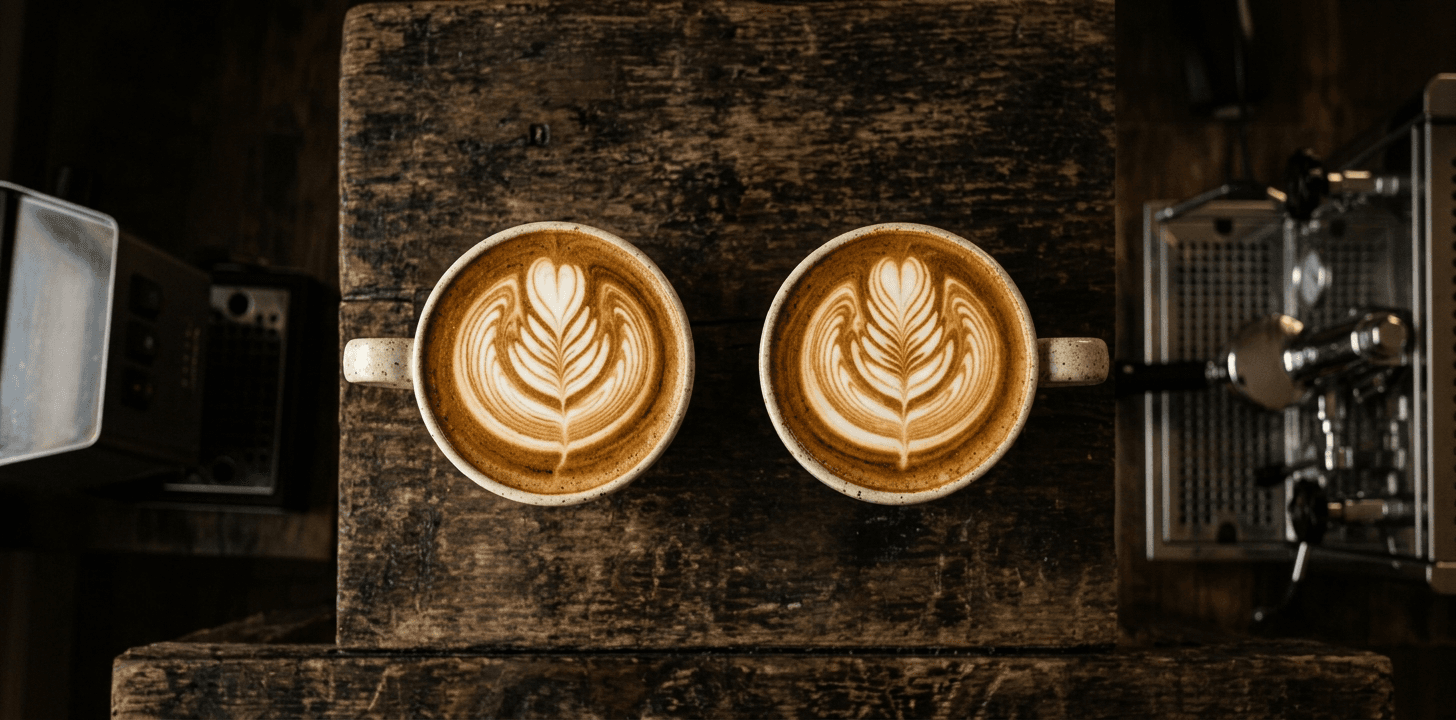
On a budget setup, knowing exactly what to fix matters even more — you can't outspend your mistakes. Brew reads each pour and tells you whether it's the milk, the height, or the finish, so your practice compounds no matter what machine it's on.
Try Brew free — a pour every day, no card →