5 Latte Art Practice Drills That Don't Waste Milk (or Espresso)
The biggest hidden obstacle to learning latte art isn't technique — it's cost. If every practice pour needs a fresh double shot and 200ml of milk, you'll practise twice a day at most, and progress crawls.
Professional baristas get good because they pour dozens of times a day. These five drills let you close that gap without the café's milk budget.
Drills 1–2: Train the Pour Without Coffee
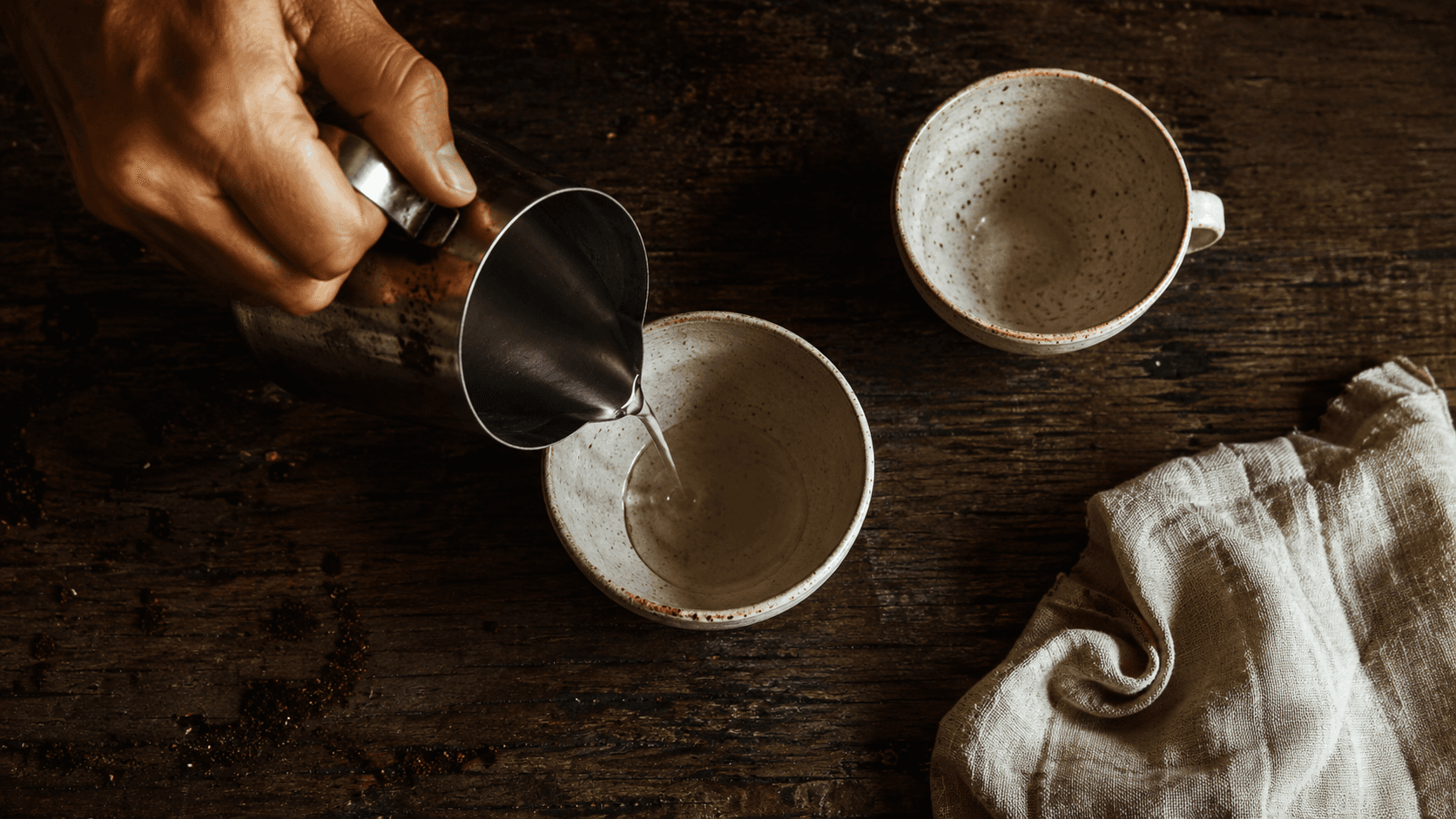
Drill 1 — water weaving: fill your pitcher with plain water and practise the motions over an empty cup: the thin high stream, the low fast flow, the wiggle, the pull-through. It feels silly and it works — wrist rhythm and flow control are muscle memory, and water is free.
Drill 2 — the soap trick: a drop of dish soap in water, shaken, mimics the body of steamed milk closely enough to practise actual pours into a cup of water with a splash of coffee for contrast. Baristas have trained with this for years.
The fix: Ten minutes of water weaving a day builds the wrist rhythm that the rosetta and tulip need — before you spend a single espresso on them.
Brew · When you switch back to real milk, upload the pour to Brew — the scores tell you whether the drilled motion is actually transferring to the cup.

Drills 3–4: Stretch Every Real Drink Further
Drill 3 — re-steam once: after a failed pour, you can scoop the foam off, re-steam the same milk once, and pour again into the same cup. The texture degrades with each re-steam, so once is the limit — but it doubles every practice session for free.
Drill 4 — split the batch: steam a full pitcher and pour two smaller cups back to back instead of one large one. Two pours, one steaming, one espresso split across both. Swirl between pours — the milk separates fast.
The fix: Combine both and a single espresso plus one pitcher of milk becomes four practice pours. That's the difference between 14 pours a week and 56.
Brew · Brew's free tier gives you one scored pour every day — pair it with these drills so your scored pour is the one where you're testing a specific fix, not warming up.

Drill 5: Practise One Variable at a Time
The least obvious drill is about attention, not milk. Most people practise by trying to pour a perfect heart every time — which means every attempt varies the milk, the height, the wiggle, and the finish all at once. When it fails, you have no idea which variable was off.
Deliberate practice means isolating: today is only about pour height. Pour three cups where the only thing you evaluate is whether the dot appeared. Tomorrow is only the pull-through.
The fix: Before each session, name the one variable you're training. Judge the pour only on that variable. Progress per pour roughly doubles when you stop grading everything at once.
Brew · This is exactly how Brew's feedback is designed — one main improvement per pour, not a laundry list. Fix that one thing, pour again, and let the next analysis pick the next priority.
Make Every Pour Count
Drills make practice cheap; feedback makes it effective. Brew scores each pour and names the single most impactful fix, so the pours you do invest real milk in actually move you forward.
Try Brew free — a pour every day, no card →