Matcha, from usucha to dirty matcha
Water at 70–80 °C, sift then paste, whisk in a W. Traditional usucha and koicha plus matcha latte, dirty matcha and matcha cold foam.
Matcha soda
Matcha, sparkling water, ice — nothing else
Sharp, green and completely dry. Carbonation does the job sugar usually does: it makes the matcha read as brighter rather than heavier.
Unsweetened matcha latte
No syrup, no honey — the matcha has to carry it
Most matcha lattes are sweetened to cover a cheap grade. Take the sugar out and the drink becomes a test of the powder: good matcha is naturally sweet and faintly savoury, poor matcha is just bitter and flat.
Usucha — thin matcha
2 g matcha, 70 ml water at 75 °C
The everyday preparation. If your matcha tastes bitter and grassy, it is almost always water that was too hot.
Koicha — thick matcha
Double the matcha, half the water, kneaded not whisked
Syrupy, intensely sweet and deeply green. Only worth making with high-grade matcha — cheap matcha at this concentration is punishing.
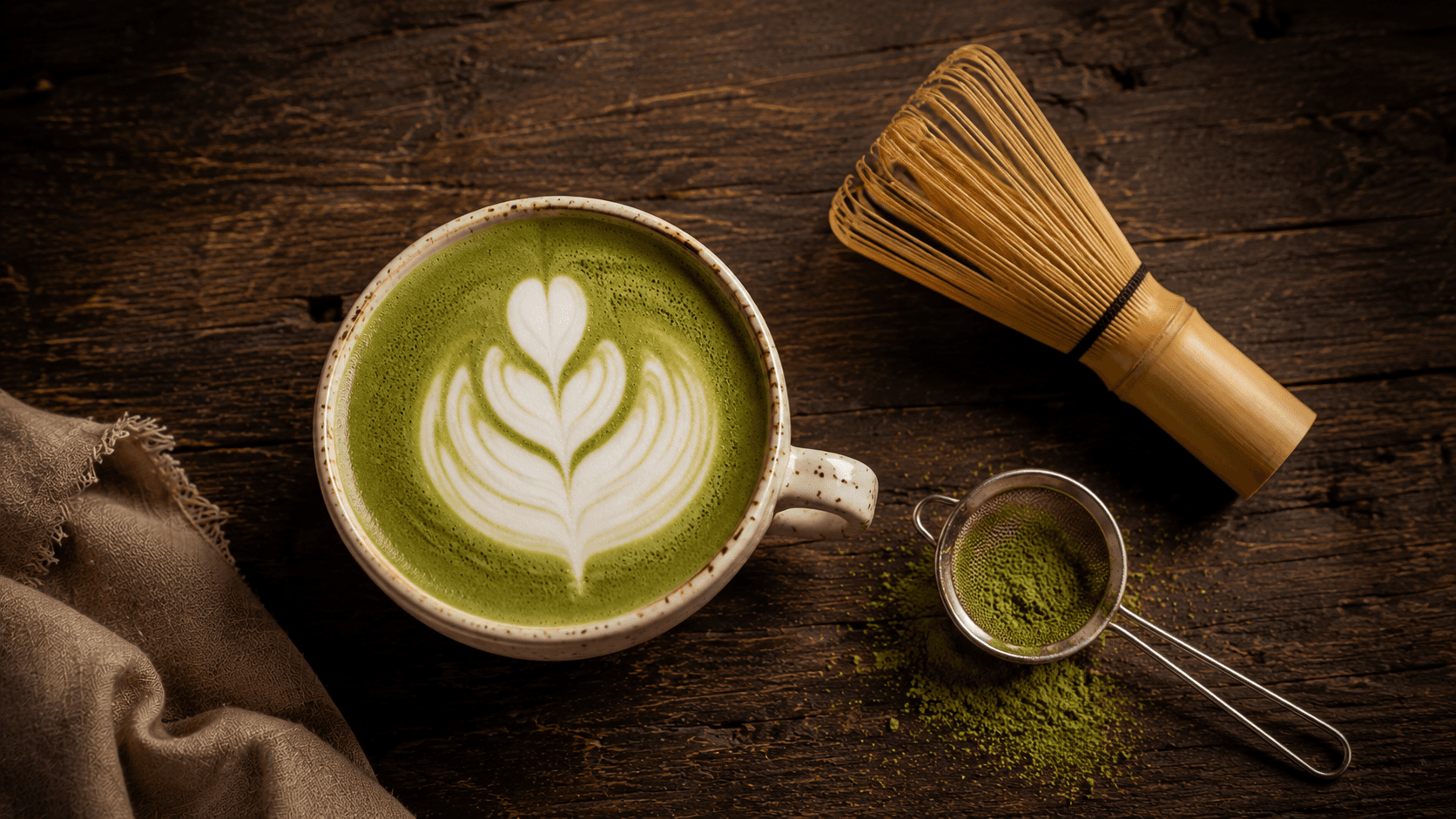
Matcha latte
Paste first, then milk — never powder into milk
Matcha will not disperse in milk. Every gritty matcha latte comes from skipping the water paste stage.
Dirty matcha
Iced matcha latte with an espresso poured over
Three distinct bands and two kinds of caffeine. Visually the best drink in this app, which is why it is everywhere.
Strawberry matcha
Crushed berries at the bottom, matcha on top
Sounds like a novelty and then works because the acidity of the fruit lifts matcha's sweetness.
Matcha cold foam
Green cap for an iced coffee, or a white cap for iced matcha
Works in both directions and both are good: matcha foam on coffee, or sweet cream foam on a matcha latte.